Wiring Method for LED Emergency Lights and Exit Sign Lights
Apr 29, 2026
Wiring Method for LED Emergency Lights and Exit Sign Lights
Wiring Methods for LED Emergency Lights and Fire Safety Exit Evacuation Signs We first need to understand the structural components of high-power LED emergency lights. Internally, they contain a driver power supply, an emergency power supply, and a battery, unlike ordinary fire emergency lights. This is because they simultaneously serve two functions: on-power lighting and emergency lighting during power outages. They can be various types, such as emergency three-proof lights and emergency ceiling lights. These high-power LED emergency lights, compared to ordinary lamps, include a lighting emergency power supply device, either inside or outside the lamp. One lamp provides dual-use lighting for both on-power and emergency lighting during power outages. Please note: it uses a four-wire system-four wires in total: fire safety wire, neutral wire, lighting switch wire, and ground wire. The switch wire is in phase with the fire safety wire. It continuously charges when powered and can be switched on and off normally, providing emergency lighting during power outages, eliminating the phenomenon of emergency lighting immediately switching off when the lights are turned off. Learn fire safety knowledge and become a professional emergency power supply specialist.
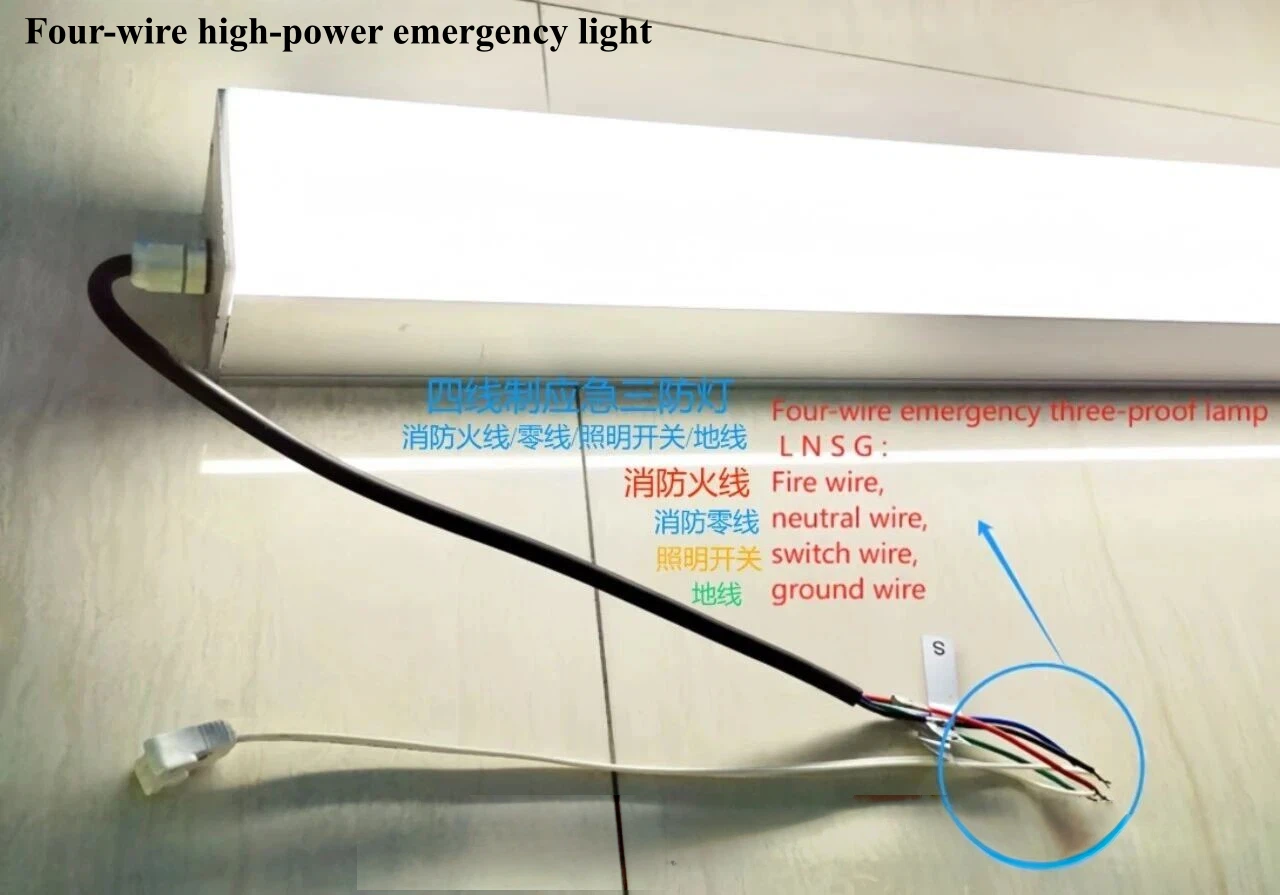
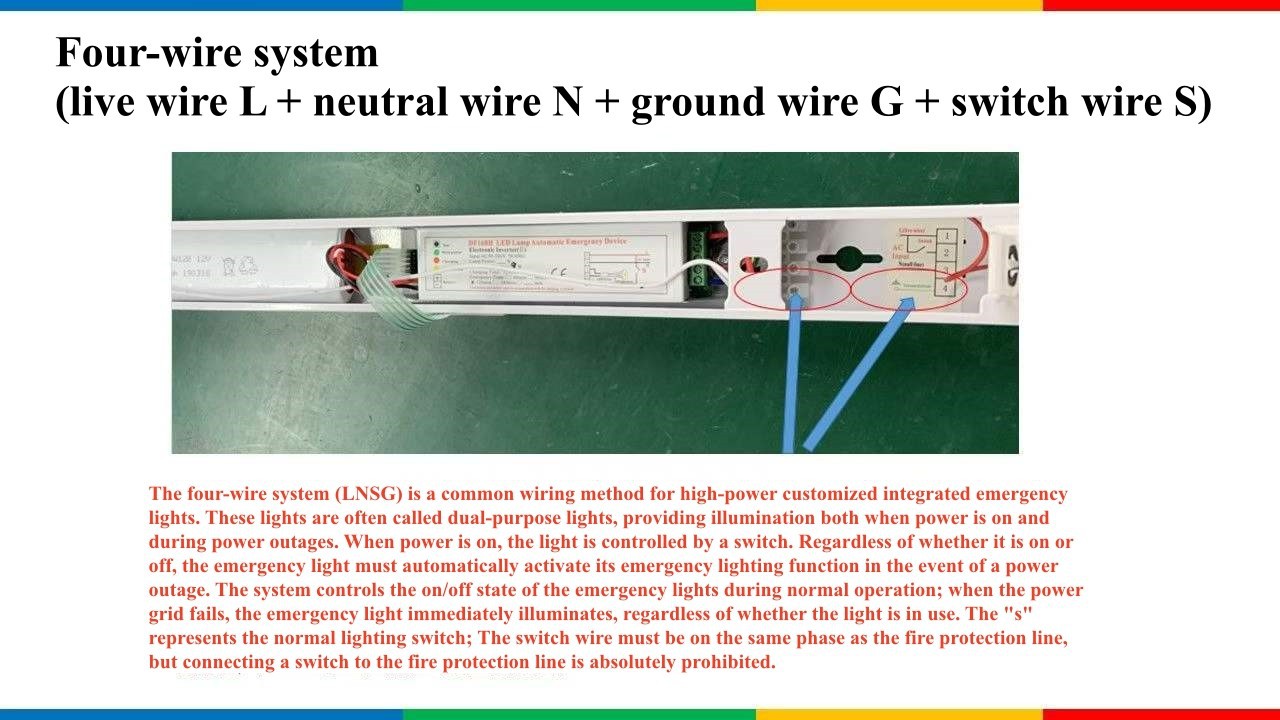
The four-wire (LNSG) wiring method is commonly used for high-power customized integrated emergency lights. These lights are often referred to as dual-purpose lights, providing illumination both when power is on and during power outages. When power is on, the light is controlled by a switch. Regardless of whether it is on or off, the emergency light must automatically activate its emergency lighting function in the event of a power outage. The system controls the on/off state of the emergency light during normal operation; when the power grid fails, the emergency light will immediately illuminate, regardless of whether the light is in use. "S" stands for normal lighting switch;The switch wire must be on the same phase as the fire protection line; connecting a switch to the fire protection line is strictly prohibited. Fire protection power lines, also known as charging power lines, will inevitably experience power outages when lights are turned off if switches are added to them in violation of regulations or if fire protection power lines are mistakenly used as lighting power lines. This forces the batteries to continuously discharge in emergency situations, preventing them from receiving timely and continuous charging. Over time, this will accelerate battery aging and shorten their lifespan. The lack of timely and continuous charging will also lead to irreversible consequences such as over-discharge, capacity decay, and polarity reversal.
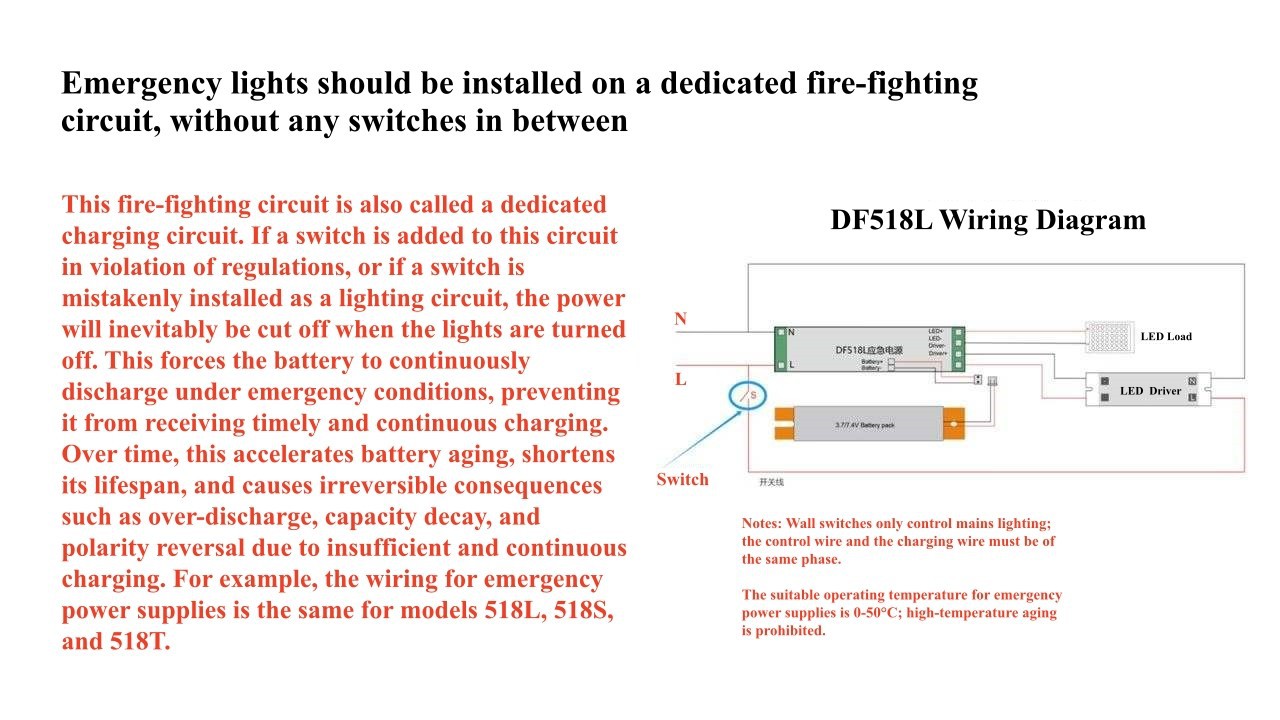
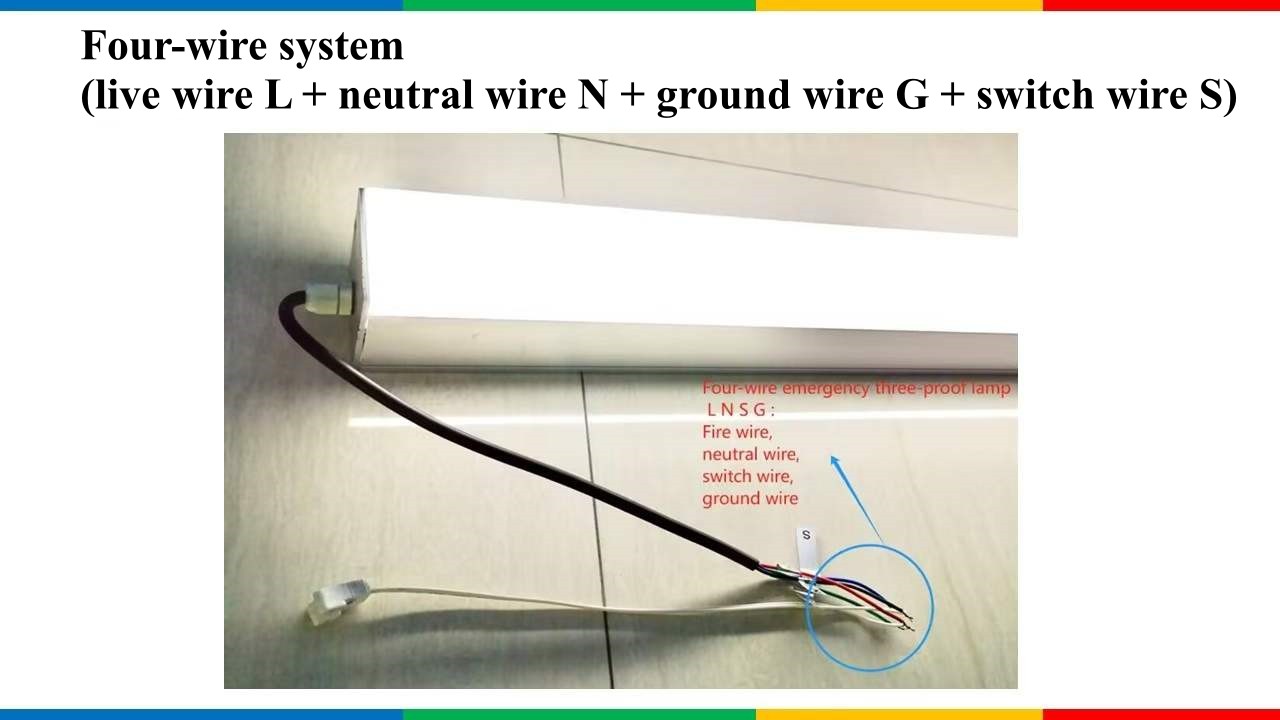 We will continue to explain the wiring method for conventional emergency lights. Again, it must be a dedicated fire protection line for input.
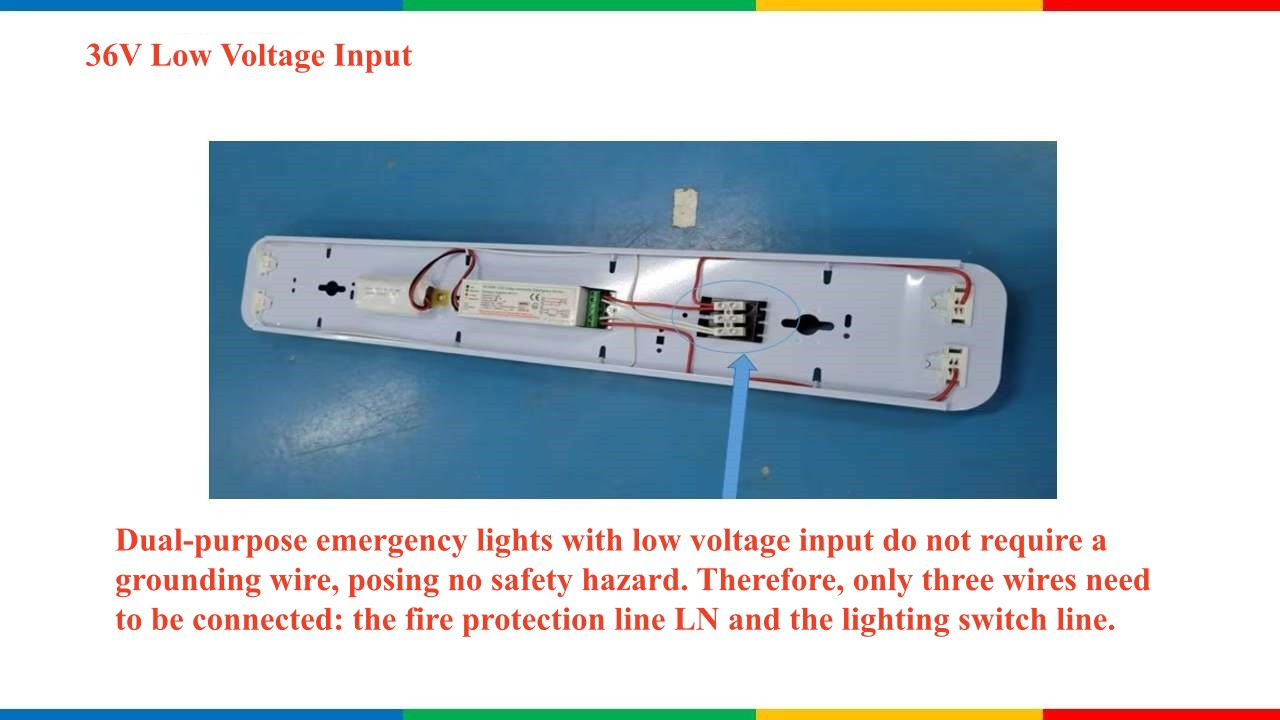
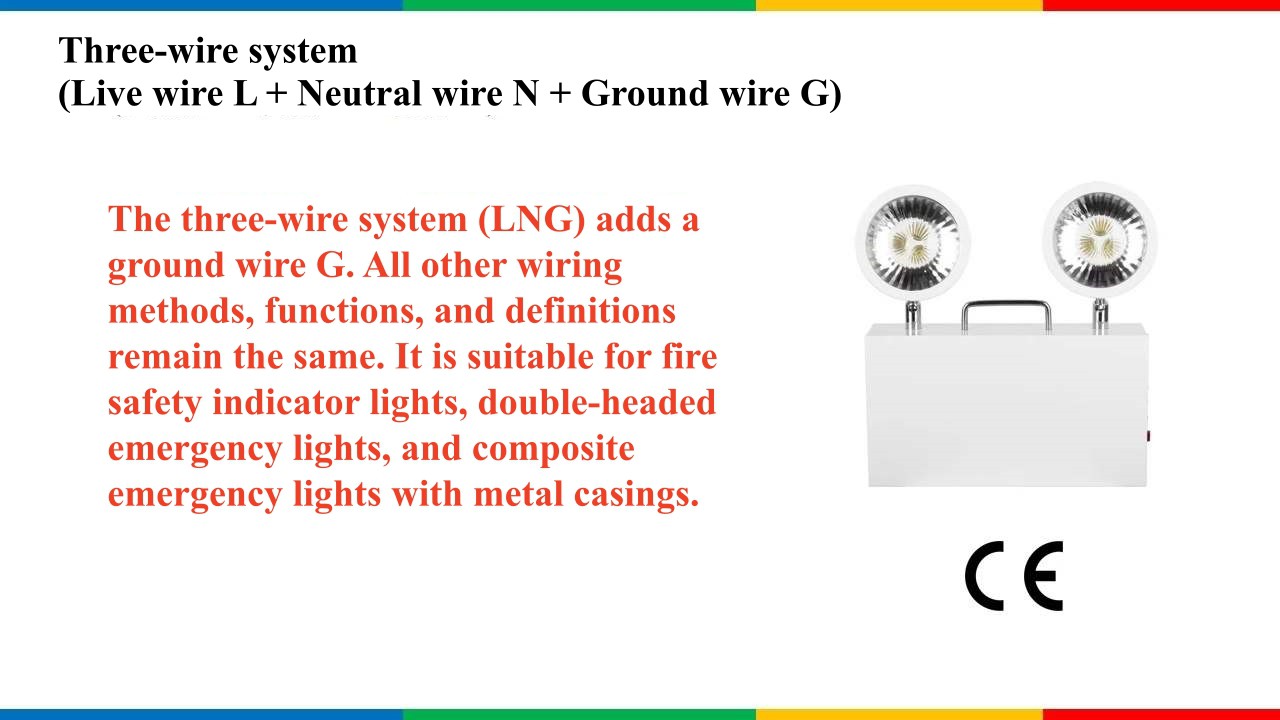
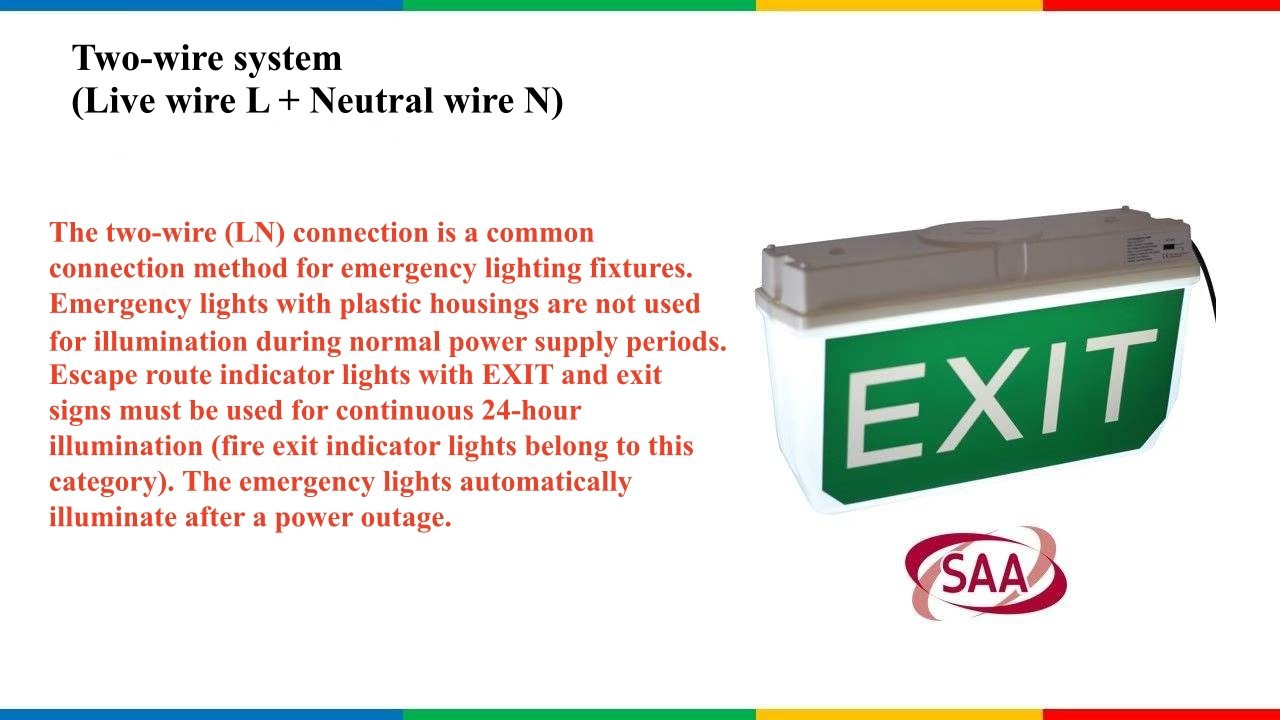
High-power fire emergency lights generally have a dual-function design: lighting when powered and emergency lighting when power is off. Please note: they are four-wire systems-four wires in total: fire safety wire, neutral wire, lighting switch wire, and ground wire. The switch wire is in the same phase as the fire safety wire. They continuously charge when powered and can be switched on and off normally, providing emergency lighting when power is off, eliminating the problem of emergency lighting automatically switching off when the lights are turned off. Learn fire safety knowledge and become a professional emergency power supply provider.
Recommended Hashtags
#LEDEmergencyLight
#EmergencyLighting
#ExitSign
#FireSafety
#EmergencyPower
#BackupLighting
#EmergencyDriver
#LightingEngineering
#ElectricalWiring
#SafetyLighting
#LEDLighting
#FireProtection